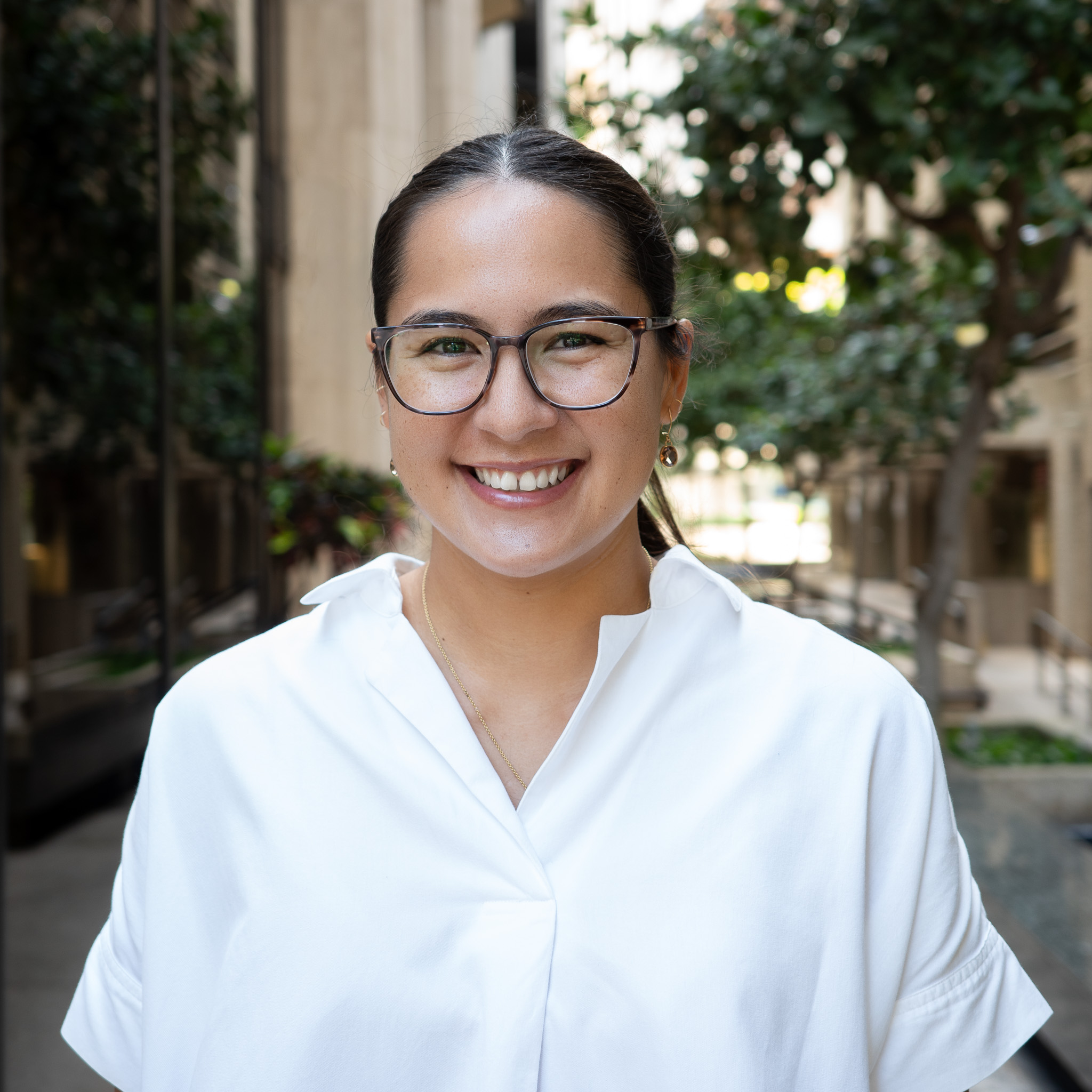
Planner
As a planner at PBR HAWAII, Ms. D’Angelo works on land use planning and design efforts, prepares environmental review documents, and facilitates engaging and productive community outreach meetings. Recent projects include Environmental Impact Statement preparation for Samuel Mahelona Memorial Hospital on Kaua‘i, and site analysis, land use planning, and permitting applications for a variety of mixed-use projects and developments on O‘ahu, Hawai‘i Island, and Maui.
Prior to joining PBR HAWAII, Kanani worked at landscape architecture and urban design firms in Boston, Los Angeles, and San Francisco. Her work primarily focused on climate resiliency planning, facilitating community engagement and participatory design projects, and landscape site design. Kanani supported projects such as Climate Ready Boston’s Coastal Resilience Solutions for Downtown Boston and North End, Vision Galveston (the island’s comprehensive community plan), and the Moakley Park Preliminary Resilience Plan, a shoreline urban park co-designed with the community and the recent recipient of the Holcim Foundation Award 2025 Grand Prize.
Through her previous Fellowship, Kanani has had the opportunity to work on multiple community-based projects on O‘ahu, including Kanehili Community Association Park in Kapolei, Waipiʻo Point Access Road Multimodal Pathway in Waipahu, and the Ko‘olauloa Community Resilience Hub in Hau‘ula. Through these projects and others, such as the Kapālama Canal Catalytic Project, she facilitated multi-day workshops, in-person and virtual community meetings, and completed conceptual site designs and landscape architectural plans.
Ms. D’Angelo specializes in the creation of long-term plans and designs that serve as a guiding framework for projects aiming to ensure the proper stewardship of ‘āina and uplifting the Hawaiʻi community. Outside of the office, Kanani supports in the restoration of Loko I‘a Pā‘aiau, a traditional Hawaiian fishpond in Kalauao, and Ka Mahi‘ai ‘Ihi ‘o Wailea, a native reforestation and farming project in Hakalau.
Beginning her career in architecture, Kanani transitioned to landscape architecture and planning in order to better support ahupua‘a restoration and mālama ‘āina efforts in Hawai‘i. Her dual-degree masters thesis, Ahupua‘a Futures in Pu‘uloa: A Vision for Urban Ahupua‘a Restoration in ‘Aiea and Kalauao, expanded on stewardship practices through the recounting of mo‘olelo and histories, ahupua‘a-wide visioning, and site-specific design proposals. To navigate these spatial and temporal scales, she leveraged both traditional planning and landscape architecture methods (GIS mapping, policy and plan analysis, planting design, etc.) and alternative practices of critical cartography, collage, ‘āina stewardship, and more.
